Assorted Notes
You have three hours from when stroke symptoms start to treat the patient successfully.
Pack Years
- 1 pack per day x 30 years = 30 pack years
- Half-pack per day x 20 years = 10 pack years
Complete Blood Count
Blood test used to evaluate your overall health and detect a wide range of disorders, including anemia, infection and leukemia.
- Red blood cells, which carry oxygen
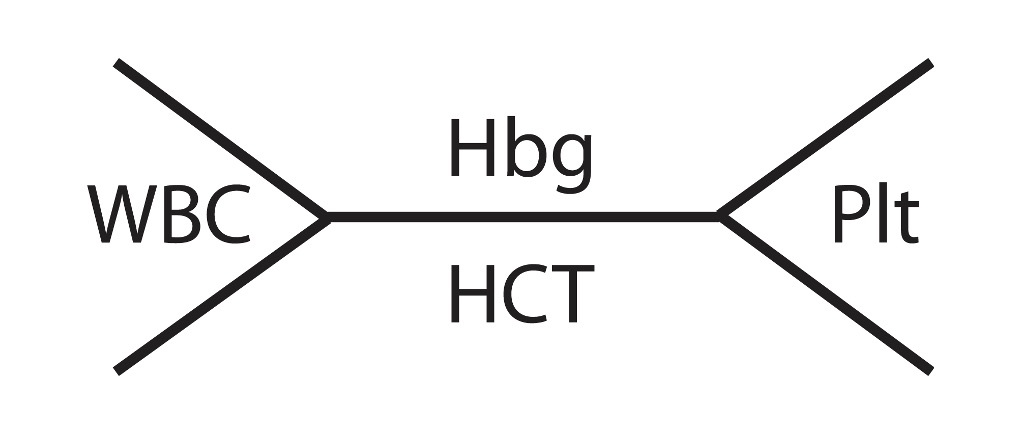
- White blood cells (WBC) which fight infection
- Hemoglobin (Hbg or Hb), the oxygen-carrying protein in red blood cells
- Hematocrit (HCT), the proportion of red blood cells to the fluid component, or plasma, in your blood
- Platelets (Plt), which help with blood clotting
How this is recorded:
Basic Metabolic Panel
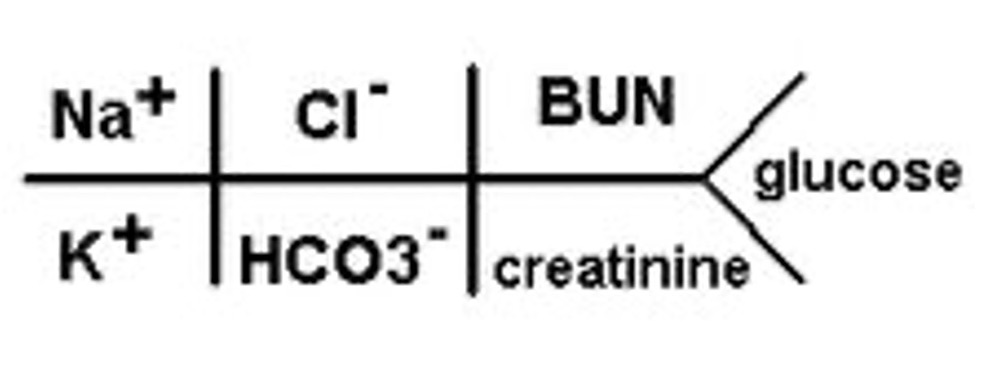
Chemistry panel where multiple chemistry tests are grouped as a single panel for ease of ordering
Hepatic Function Panel
Comprehensive Metabolic Panel = Basic Metabolic Panel + Hepatic Function Panel
Hepatic Function Panel (HFP), also known as liver function tests (LFTs), is a group of seven tests used to evaluate the liver for injury, infection, or inflammation.
7 Components of HFP:
- Alanine aminotransferase (ALT)
- Albumin (Alb)
- Alkaline Phosphatase (AP)
- Aspartate aminotransferase (AST)
- Direct Bilirubin (DB)
- Total Bilirubin (TB)
- Total Protein (TP)
Culture
It used to be that residents basically lived at the hospital with very little handoff. See the case of Libby Zion. It was a culture thing. Attendings would go home. It was called “being a Gunner”. Hustle culture but for physicians. Things were a bit different back then: you lived at the hospital if you were a resident. You couldn’t call the attending unless the patient was actually dying (“Code Blue” = Stopped Breathing).
I-PASS the BATON - Handoffs
These happen in person with a laptop. Printouts may be involved. Some things involve the EHR (like EPIC) and some are done verbally.
- You and the person need to show up with notes, lists and not do this from memory.
- You need to do this in person.
- You need to go through each patient.
- You need to set apart dedicated time to do this. Administration needs to help here.
- Try not to do it towards the end of the day when you’re raring to GTFO of there.
| Letter | Section | Description |
|---|---|---|
| I | Introduction | Introduce yourself and your role/job (include patient). |
| P | Patient | Name, identifiers, age, sex, location. |
| A | Assessment | Present chief complaint, vital signs, symptoms and diagnosis. |
| S | Situation | Current status/circumstances, including code status, level of (un)certainty, recent changes and response to treatment. |
| S | Safety | Critical lab values/reports, socioeconomic factors, allergies and alerts (falls, isolation, etc.). |
| B | Background | Comorbidities, previous episodes, current medications and family history. |
| A | Actions | Explain what actions were taken or are required. Provide rationale. |
| T | Timing | Level of urgency and explicit timing and prioritization of actions. |
| O | Ownership | Identify who is responsible (person/team), including patient/family members. |
| N | Next | What will happen next? Anticipated changes? What is the plan? Are there contingency plans? |
Tachycardia and Heart Rate
Happens a lot: you measure a high heart rate bu in the PE (Physical Exam) it may be noted as normal because that’s the default on the form.
Really Random
Nursemaid Elbow - Wild.
Subdural Hematoma — scrollable CT Scan. Subdural, Epidural, Intraparenchymal, Subarachnoid harmorrhage. Not everyone gets a Head CT (check for kind of fall, etc). Can cause bias: if you miss a bleed (you’re human), you will keep ordering everyone a head CT.
“See One, Do One, Teach One”